Darshan 6:00 AM – 11:00 AM & 4:00 PM – 6:00 PM Kodakanchi, Jinnaram Mandal, Sangareddy Dist. +91 91771 30532

Temple History

The origin, heritage and enduring spiritual importance of the Sri Adi Narayana Swamy kshetram at Kodakanchi.

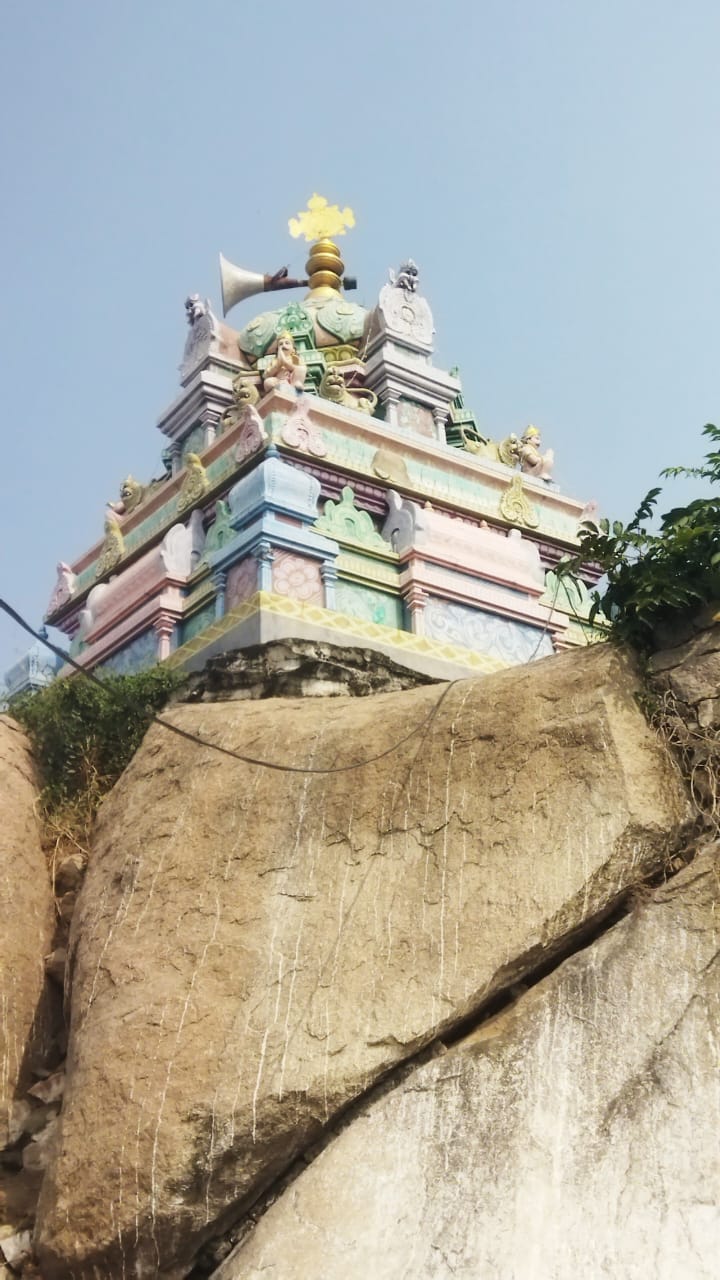
The temple vimanam above the granite boulders of the hillock at Kodakanchi
Origin

A Dream, a Forest and a Hill

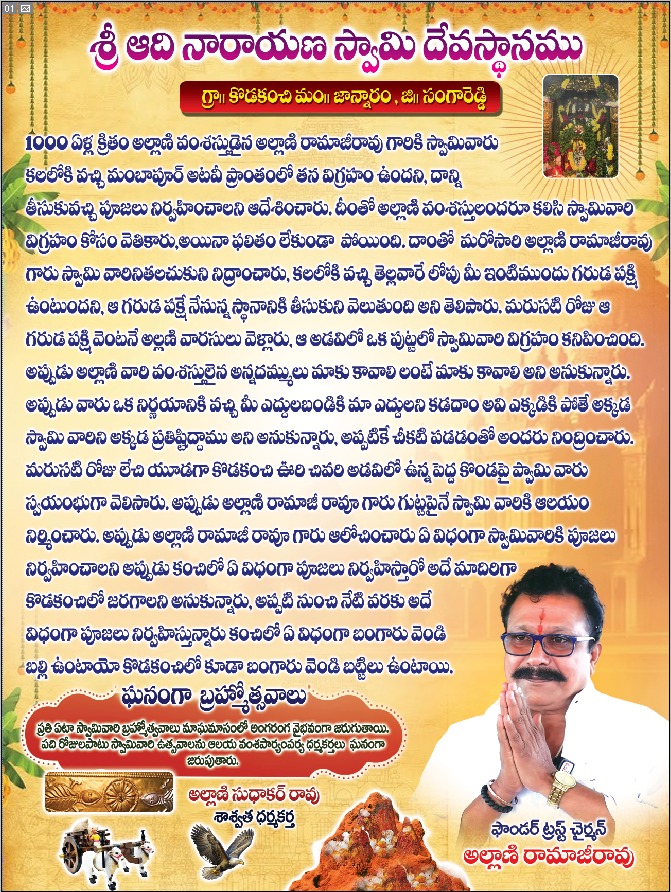
About a thousand years ago the Lord appeared in a dream to Ramoji Rao, a descendant of the Allani family, and told him that his idol lay in the forest of Mambapur — and that it should be brought out and worshipped.

The idol was found in the forest, in a hollow in the ground. The people of the Allani clan carried it to Kodakanchi and installed it upon the rocky hill above the village, where they performed the first great puja. The murti is swayambhu — self-manifested, not sculpted by any hand — and it is worshipped here as Sri Adi Narayana Swamy together with his consorts Sridevi and Bhudevi.

The temple that grew around that spot was built about a thousand years ago, in the 10th century CE. Its sanctum still sits on the granite outcrop where the idol was first set down; the painted vimanam rises directly out of the boulders, and the gopuram, prakaram and pushkarini were added around it over the centuries. After a major renovation in recent years the kshetram has regained much of its former glory.

“Even if you cannot go to Kanchi in your lifetime, go to Kodakanchi.” — The Telangana folk saying that gave the village its second name

Significance

Historical & Spiritual Importance

Three strands — historical, spiritual and cultural — make this temple central to the life of the region.

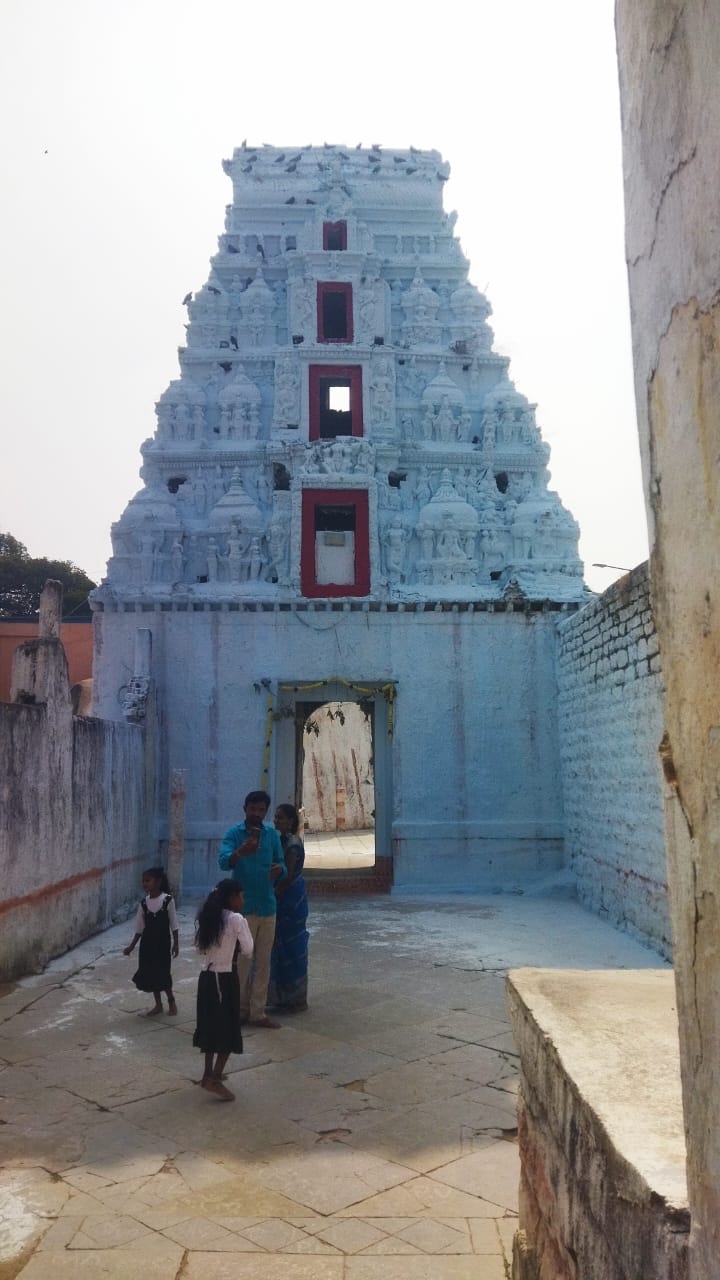
Tiered stucco figures on the entrance gopuram Historical

A Thousand-Year-Old Kshetram

Built in the 10th century CE on the granite hill where the swayambhu murti was installed, the temple has stood through a thousand years of change on the Deccan — and still keeps the Vaishnava agamic order of worship it began with.

A family standing before the inner gopuram of the temple Spiritual

The Golden and Silver Lizards

Like the great temple at Kanchipuram, this kshetram bears a golden lizard and a silver lizard upon its wall. Devotees believe that touching them releases a person from lizard-dosha and from the troubles it brings.

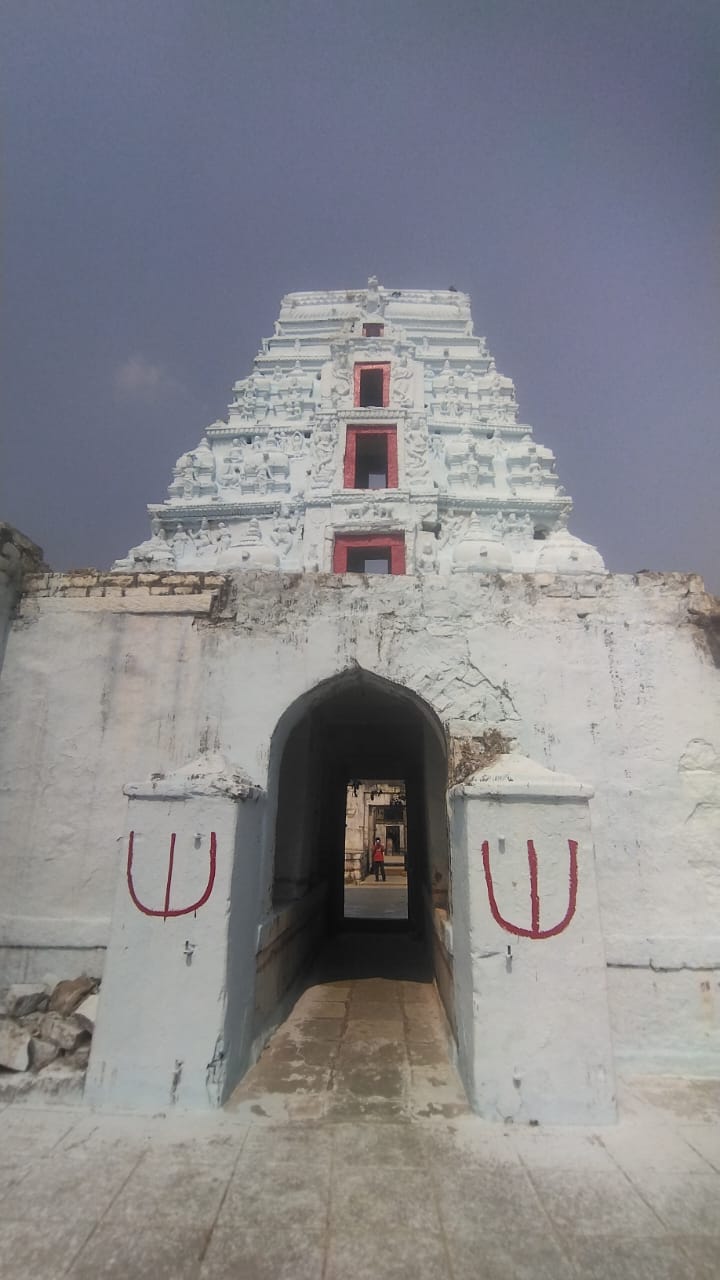
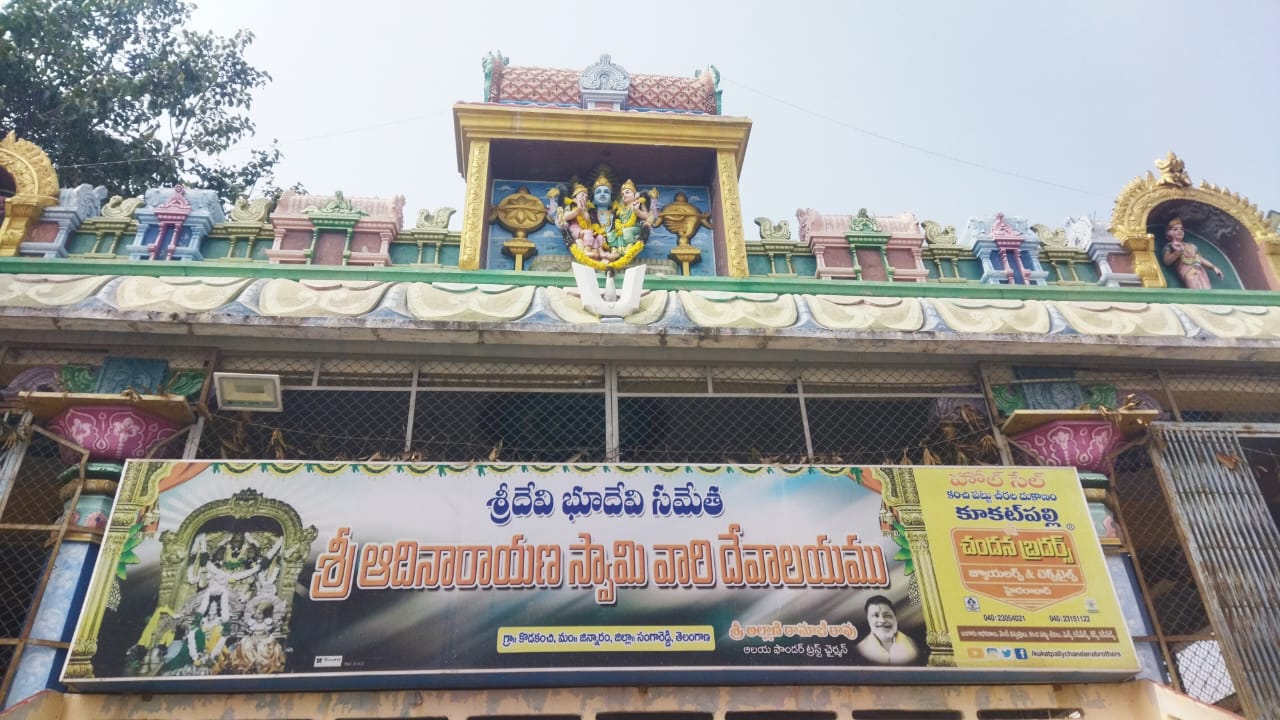
The temple entrance with the Sridevi Bhudevi sameta Adinarayana Swamy panel above Cultural

The Heart of the Village

Weddings, naming ceremonies, harvest thanksgiving and the annual jatara are all anchored to the temple. Its calendar is, in effect, the calendar of the village.

The gopuram of the Kodakanchi temple, known as Telangana Kanchi
Heritage

Why Kodakanchi is Called Telangana Kanchi

In Telangana folklore the saying runs: even if you are not able to visit Kanchi in your lifetime, visit Kodakanchi. From that belief the village took its second name — Telangana Kanchi.

The comparison is not merely poetic. This temple carries the same sign that pilgrims seek at the Varadaraja Perumal temple in Kanchipuram: a golden lizard and a silver lizard, fixed upon the temple wall. Devotees believe that touching them frees a person from the doshas caused by lizards, and from the troubles that follow.

What the two kshetrams hold in common:

  • The golden and silver lizards — the sign that draws devotees here who cannot make the journey south to Kanchipuram.
  • The presiding Lord — Vishnu, worshipped with Sridevi and Bhudevi in the Vaishnava agamic order.
  • The promise held out to the pilgrim — relief from dosha and the fulfilment of a vow made in good faith.

Note for the temple office: this account follows the tradition as recorded in press and pilgrimage sources. Please add any inscriptional or documentary evidence held in the temple records.

Milestones

Timeline of the Temple

Key moments in the life of the kshetram, as recalled by the community. (EDITABLE — replace era labels with confirmed dates.)

  1. c. 1000 years ago

    The Dream of Ramoji Rao

    The Lord appears in a dream to Ramoji Rao of the Allani family and tells him that his idol lies in the forest of Mambapur, waiting to be brought out and worshipped.

  2. The Discovery

    The Swayambhu Murti is Found

    The self-manifested idol is found in a hollow in the Mambapur forest, exactly as the Lord had described it.

  3. The Installation

    Raised Upon the Hill at Kodakanchi

    The people of the Allani clan carry the murti to Kodakanchi and install it on the rocky hill above the village, where the first great puja is performed.

  4. 10th century CE

    The Temple is Built

    A stone temple rises around the swayambhu murti on the granite outcrop. The sanctum, its vimanam and the Garuda shrine on the ground floor take the form the devotee sees today.

  5. Over the Centuries

    Gopuram, Prakaram & Pushkarini

    The entrance gopuram, the enclosing prakaram wall and the stepped temple tank are added, and the golden and silver lizards are set upon the wall in the manner of Kanchi.

  6. Recent years

    Renovation and Renewal

    A major renovation restores the temple, and it regains much of its past glory. Facilities are improved for the pilgrims who arrive from Hyderabad and the surrounding districts.

  7. Today

    Ten Days of Brahmotsavam

    The annual Brahmotsavam is celebrated over ten days from the first of February, with the Kalyanam of the Lord and his consorts on the fourth day, drawing thousands of devotees to Telangana Kanchi.

Help Us Record This History

If your family holds photographs, documents or memories connected with the temple, the trustees would be glad to receive them for the temple archive.